

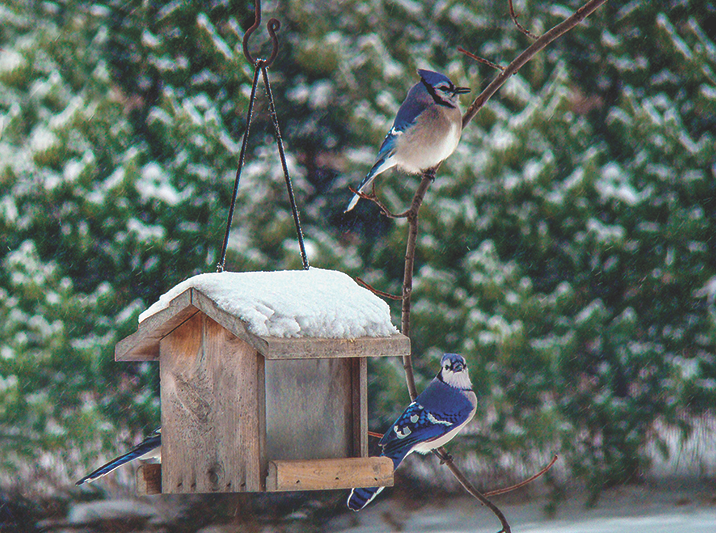
A blue jay perches near a snow-dusted backyard feeder, a familiar winter sight across North Texas. With the right feeder and food, homeowners can attract a variety of birds — from cardinals to finches — throughout the year.
Few things bring a yard to life quite like birds. From the bold blue flash of a jay to the familiar whistle of a cardinal, backyard birds add color, movement and a sense of calm to outdoor spaces. In Texas, where patios and backyards are used year-round, bird feeding has become a simple and rewarding way to connect with nature just outside the window.
Providing supplemental food encourages birds to linger, especially during cold snaps, drought conditions or early spring nesting season. While feeding birds supports local wildlife, researchers note it benefits people as well. Studies suggest that watching and caring for birds increases appreciation for nature and promotes a sense of well-being.
The type of feeder placed in a yard often determines which birds will visit. Hopper feeders, one of the most common designs, hold a large amount of seed and are typically covered, helping keep food dry during rain. These feeders are especially popular in North Texas and frequently attract cardinals, blue jays, grackles and blackbirds. Tube feeders, which feature multiple feeding ports and perches, appeal to a wide range of songbirds and work well in smaller yards or on patios.
Suet feeders are another backyard staple, particularly during winter. These cage-style feeders hold high-energy suet cakes made from rendered fat mixed with seeds or fruit. Woodpeckers, nuthatches and chickadees rely on this extra fuel when insects are scarce. In Texas, commercially produced suet is recommended, as homemade grease mixtures can melt on warmer days and damage birds’ feathers.
For bird watchers who enjoy close-up viewing, window feeders and newer “smart” feeders attach directly to glass and allow birds to feed just inches away. Some smart feeders even include cameras that stream live video to a phone or tablet and may identify visiting species. These feeders tend to attract smaller birds such as finches and chickadees.
Hummingbirds, a favorite across much of Texas, require a different setup. Sugar-water feeders, often accented with red, provide the nectar these fast-moving birds need. A simple mix of white sugar and water — without added dye — is best, and feeders should be cleaned regularly, especially during warmer weather, to prevent mold.
Choosing the right food is just as important as selecting the feeder. Black oil sunflower seeds remain one of the most reliable options for backyard feeding. Their thin shells and high fat content make them easy to eat and appealing to dozens of bird species commonly found in Texas. Nyjer seed, sometimes called thistle seed, is ideal for finches and should be offered in feeders designed specifically for its small size.
Peanuts, either shelled or crushed, provide another high-energy option and are especially attractive to jays and titmice. Suet continues to be valuable during colder months, when birds need extra calories to regulate body temperature.
Not everything belongs in a feeder, however. Bread and table scraps may seem harmless, but they offer little nutrition and can cause health problems. Foods high in salt or sugar should also be avoided, as they interfere with birds’ natural diets.
Cleanliness is often overlooked but plays an important role in keeping backyard birds healthy. Feeders can concentrate large numbers of birds in one area, increasing the risk of disease transmission. Conservation groups recommend cleaning feeders weekly using a mild bleach solution, then allowing them to dry completely before refilling. Keeping the area beneath feeders clean helps prevent waste buildup and discourages pests.
With the right combination of feeders, food and basic care, a Texas backyard can become a reliable stop for birds throughout the year. For many homeowners, the daily activity outside the window — wings fluttering, seeds scattering, birds calling — becomes one of the simplest and most rewarding parts of home life.
By Carrie Dunlea, Special contributor
Enjoying this article? Want to read more like this? Support local journalism by subscribing to your community newspaper today!












0 Comments